
The Hideout
About
Social-spatial Behavior
Location
MSD Building and Surroundings
Focus
Human Behavior and Space
Year
2025
Keywords
Behavioral Phenomena, Organisational Strategies
Overview
This project explores how built spaces shape human behaviour through functional and socio-spatial analysis. Focusing on the MSD Building and surrounds, it involves experiential exercises and quick design esquisses to create interventions for young adults—spaces for social connection, play, and individual respite, mindful of Covid-19 restrictions.
Behavioral Phenomena Sketches

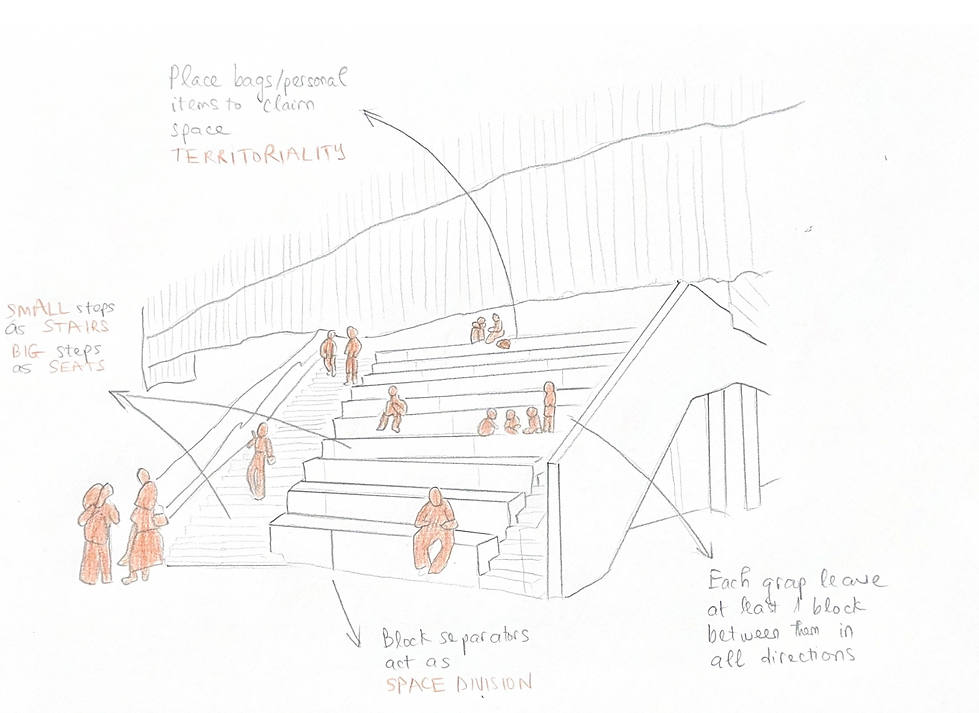


Extract from my Design Journal
DO YOU KNOW?
People naturally maintain “personal space bubbles” that vary across cultures. For example, in many Western countries, people prefer about an arm’s length for casual conversation, while in some Eastern cultures, closer distances feel more comfortable.
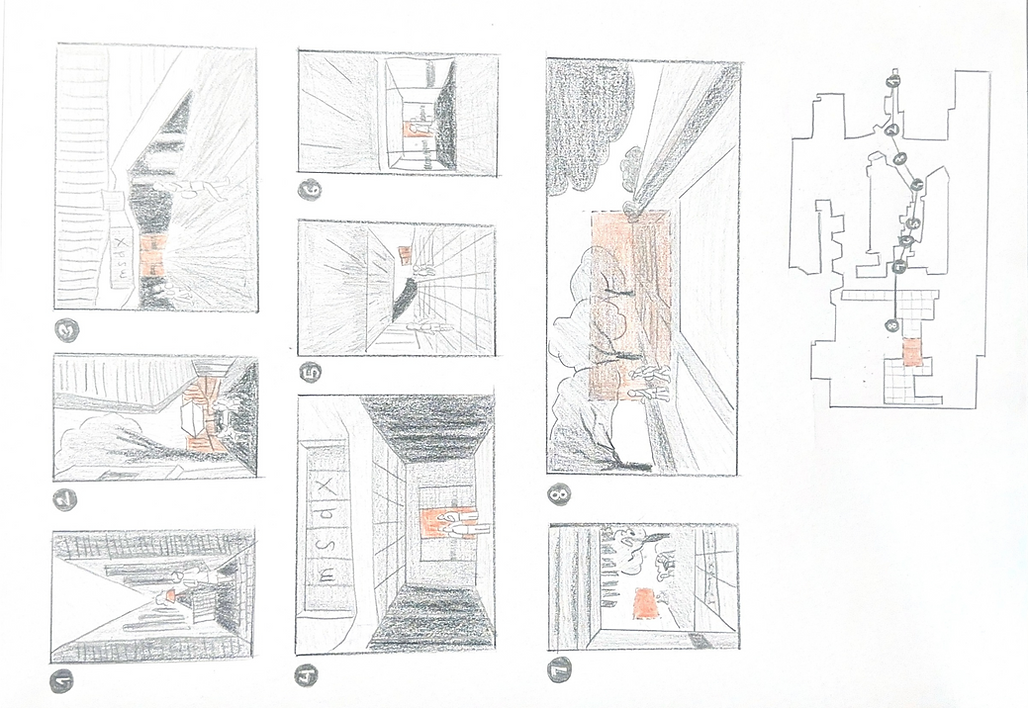
Spatial Progression Sketches
In my spatial progression sketches, I use a sequence of small and large frames to simulate how people might feel as they move through the space—sometimes compressed, sometimes released.
This strategy echoes techniques used by architects like Tadao Ando, who often employs narrow, confined passages that suddenly open into expansive volumes, heightening the emotional impact and creating a sense of discovery.


Extract from my Design Journal
The Trap of
Humancentric Design
I initially fell into the trap of humancentric design during my sketching phase, viewing the curvy bridge merely as an aesthetically pleasing walkway for Unimelb staff & students rather than considering the needs of the butterflies.
Later, I adjusted my design to better accommodate butterflies and improve its constructability. For example, the curvy bottom of the bridge makes it much more expensive and difficult to build without providing any benefit for the butterflies. Therefore, I omitted it from my final design.
.png)
Brainstorm Sketch

Organisational Strategies
DO YOU KNOW?
Frank Lloyd Wright often designed entryways to be intentionally low and narrow, creating a sense of compression—so that when people stepped into the main space, it felt dramatically larger and more uplifting.

1:50 Scale Plan

1:50 Scale Section


Extract from my Design Journal
